Some links in my articles are affiliate links. I may earn a commission when you buy through them.
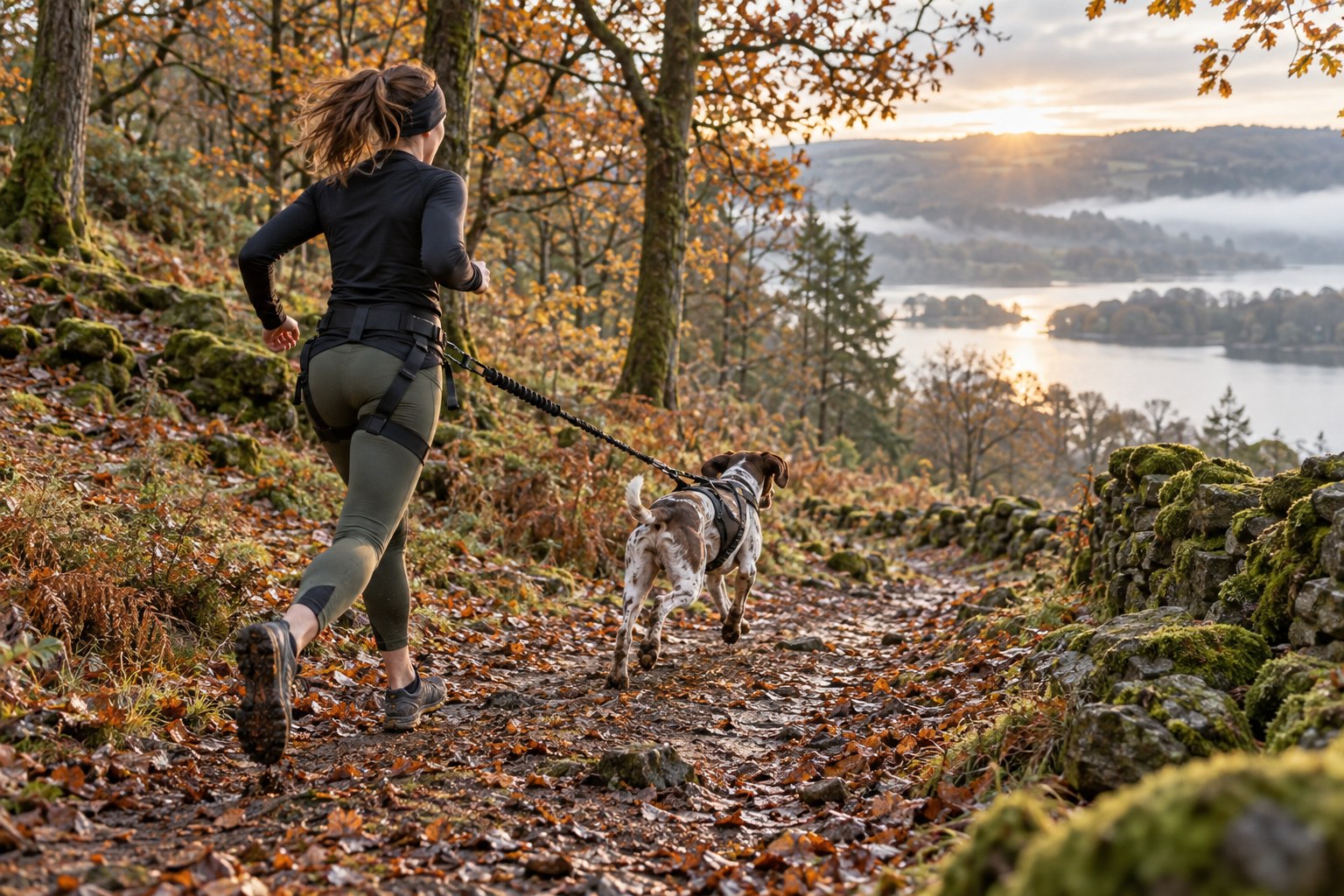
Running with your dog gives an ordinary trail a completely different rhythm. The right belt should let you enjoy that rhythm: a comfortable connection, room for the essentials and no constant pulling things back into place. Start with the kind of outing you have in mind. Below, we’ll work through two useful options, the fit details that are easy to miss and how to choose enough storage without carrying more belt than you need.
The quick decision
Choose the pulling belt for racing; the pack belt for longer outings
The CaniX belt 3.0 is the cleaner choice when you want a dedicated canicross connection and carry only small essentials. Choose the Trail light belt when the run needs a 3-litre main pocket and bottle storage. These are different jobs, not interchangeable sizes of the same pack.
The differences that affect a real run
| Question | CaniX belt 3.0 | Trail light belt |
|---|---|---|
| What is it for? | Dedicated canicross belt with a front screw-lock carabiner | Trail-running belt pack that can be used with or without a dog attached |
| Storage | Expandable pocket, stated up to 0.5 litres | 3-litre main pocket, two bottle pockets, plus two small front pockets |
| Stability system | Adjustable leg straps and grippy inner fabric | Adjustable, removable leg straps |
| Manufacturer size chart | S: 50–78cm; M: 70–108cm; L: 90–130cm waist circumference | M: 70–108cm circumference |
| Check the model | CaniX 3.0 product page | Trail light product page |
The number on the belt is not a measure of how much kit you can bring: the CaniX 3.0’s 0.5-litre pocket is a small-items pocket. A jacket, dog bowl and water need another carrying solution. Conversely, the Trail light belt is much more pack than most short, supported canicross races require. Check your event’s permitted equipment and line rules separately; a shopping page is not a race rulebook.
A useful capacity calculation.
As a load example, one litre of water weighs roughly one kilogram before you count the bottles. Check the shape and dimensions of your bottles against the pockets; the manufacturer does not state a 500ml-per-pocket limit. That water weight is additional to the main-pocket load and can change bounce and belt position. Try it with the exact bottles and layers you intend to carry; do not judge fit from an empty belt.
Get the fit right with your actual running load
Measure at the place the manufacturer instructs you to wear the belt, over the clothing you will actually run in. The CaniX 3.0’s size ranges overlap: a 74cm measurement falls inside both S and M. That does not make either size automatically correct. Adjustability, clothing thickness and where the padded part sits under tension matter. Consult the manufacturer’s fitting guide, and if between sizes seek a fit check rather than guessing from a label.
Both models use leg straps to resist riding up. The Trail light’s straps can be removed, but doing so changes how it behaves when a dog pulls. Adjust on an easy, controlled outing before a hard run. If a line sweeps across your thighs, the belt twists or pressure concentrates on your lower back, stop and refit. A belt should leave you able to run normally and manage your dog.
The connector and the dog-side kit are separate decisions
The CaniX 3.0 is supplied with a screw-lock carabiner. Check the exact line connection and your event’s rules before running with more than one dog. A locking carabiner is also not the same thing as a quick-release mechanism. If quick release is relevant to your activity or rules, verify the exact hardware and procedure before you go. Never assume every similarly named CaniX generation uses the same front piece.
The runner’s belt is only one part of a safe, compatible system. Check the dog’s pulling harness fit, the line and both end connectors, and ensure your dog is conditioned for the distance and conditions. An ordinary neck collar is not a substitute for a suitable pulling harness. If the weather is warm, adapt or postpone the session based on the dog rather than treating extra water capacity as a cure for heat risk.
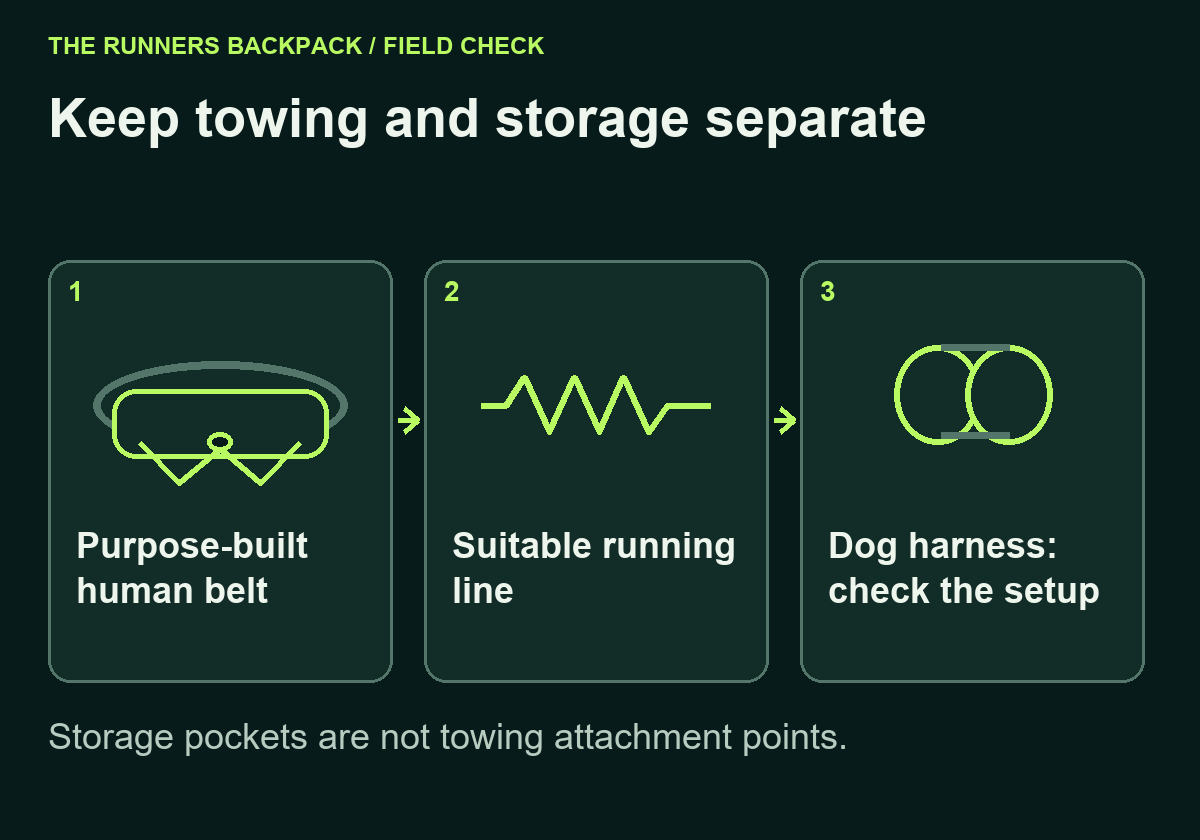
A three-step buying check
Where I would start
For dedicated canicross sessions or a short supported event, start with the CaniX belt 3.0 if its size and connection meet your needs. Its design puts the pulling task first and keeps the pocket small. For a dog-accompanied trail run where you must carry water and an extra layer, the Trail light belt has a more relevant carrying layout. If your route needs still more space, look at a running vest and plan carefully how its fit interacts with the pulling belt; our hydration guides can help with the water-carrying side. Choose around the outing you want to enjoy, then check the loaded fit. That is a much more useful starting point than picking the smallest-looking belt.